• When the Books Close, School Doesn’t End

    A reader recently asked how we balance homeschooling with chores around the homestead. It’s a good question, but the more I thought about it, the more I realized we don’t really balance the two. The chores aren’t built around homeschooling, and homeschooling isn’t built around the chores. That’s just how our family lives, and somewhere along the way the two naturally grew together.
    The funny thing is, homeschooling didn’t start because of the homestead. It actually came first. Years before we packed a moving truck or started calling this place JW Homestead, our middle daughter, K, came to us and asked if she could be homeschooled. At first, I didn’t think much of it. I figured it was another kid phase. She told us she was bored, but that wasn’t the only reason. She was also frustrated by how kids were treating each other and even their teachers. We listened, but I honestly expected the idea to disappear after a week or two.

    It didn’t.
    K kept asking, and Nicole started doing what Nicole does best. She researched everything she could get her hands on. She compared curriculum, watched videos, read reviews, and came back with a plan. She wasn’t asking me to blindly trust the process. She had answers to the questions I hadn’t even asked yet, and that gave me enough confidence to say yes.
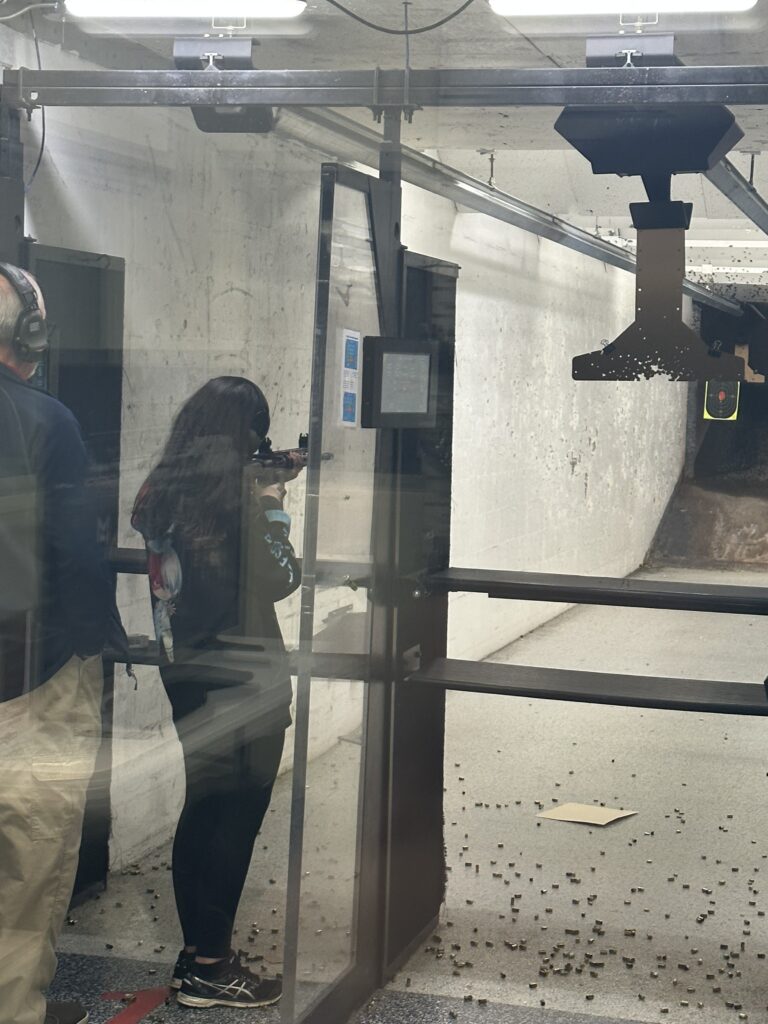
    Well… sort of. I agreed to try it from Christmas break until the end of the school year. That was the deal. We’d give it an honest shot, then sit down and decide if we wanted to continue. I figured that was a fair compromise. If it worked, we’d keep going. If it didn’t, we’d go back to traditional school.

    One of the first things that surprised me was how quickly K finished her lessons. I remember wondering what she was going to do with the rest of the day. I expected to hear something like, “Can I go watch TV?” or “Can I go play?” Instead, she asked if there was more she could learn. I wasn’t expecting that answer at all. The following school year, M asked if she could homeschool too, and before long both girls were learning at home.

    Nicole is our teacher. I still have a full-time job, so while I’m off solving technology problems, she’s at home teaching math, science, history, English, and everything else that goes along with it. My role is different. By the time I get home, school on paper is usually over, but that’s when I get to hear what they learned, answer questions, ask a few of my own, and somehow those conversations keep going through dinner and into the evening.

    Our mornings are pretty simple. Everybody eats breakfast, everybody helps feed the animals, and then Nicole starts lessons with the girls. They break for lunch, finish another lesson or two, and by early afternoon the books are usually put away. The chores didn’t change because we homeschool. The girls would’ve had chores no matter what. Around here everybody pitches in because that’s what families do.

    What changed was everything that happened in between.

    If we’re outside one night and the Milky Way is bright overhead, somebody asks why we couldn’t see it when we lived in the city. If chicks are hatching, we’re talking about biology before breakfast. If one doesn’t make it, that’s a hard conversation, but it’s a real one. If we’re picking peaches or blueberries, we’re talking about why one tree produced more fruit than another. If I’m paying bills and one of the girls wanders over, we’ll end up talking about interest rates, loans, or why borrowing money isn’t free. None of those conversations were scheduled. They happened because somebody was curious enough to ask a question.
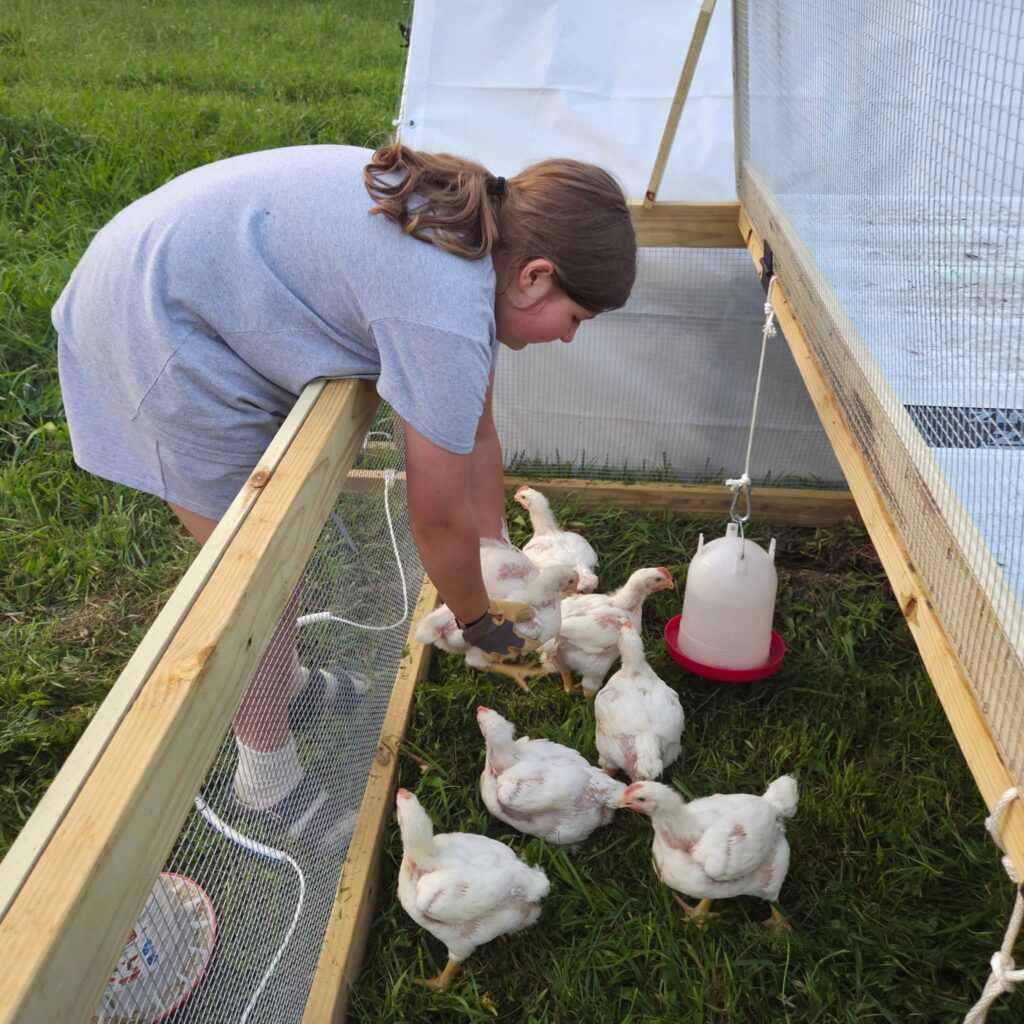
    The meat chickens probably changed my perspective more than anything else. When you’ve watched a chick hatch, carried feed buckets every day, made sure it had clean water, and then harvested it months later, supper means something different. It isn’t just food anymore. You understand that a life fed your family. You become a lot slower to scrape leftovers into the trash because you know exactly what it took to get that meal onto your plate. Everything has a purpose, and I think that’s a lesson that’s getting harder to find.

    People ask about socialization more than anything else. I understand the question because I asked it myself years ago. My answer today is pretty simple. We don’t believe social skills magically appear because kids spend the day in a classroom. They’re learned by doing. When we go to a restaurant, the girls order their own food. If we’re at a gas station or a store, they’re the ones paying for their snack and making small talk with the cashier. They learn to look people in the eye, say please and thank you, and have a conversation with adults as well as kids. Around our dinner table, if somebody is talking, the phones get put away. If we disagree, we work through it without yelling over each other. Those aren’t homeschool lessons. They’re family lessons.

    The biggest surprise for me wasn’t that homeschooling worked. It was how much more connected we became as a family. Back when the girls were in traditional school, I’d ask, “How was school?” and I’d usually get the same answer every parent gets: “Good.” That was about the end of the conversation. Now I already know what they’ve been studying because Nicole and I talk. If I see an interesting article, a YouTube video, or something happens around the homestead, I know what they’ve been learning and can tie it into a conversation. Sometimes I’m the one asking questions. Sometimes they are. Either way, the learning didn’t stop because the books were closed.
    I still check in with the girls pretty regularly too. Not just about school, but about life. Are they happy? Is something frustrating them? Do they still enjoy homeschooling? We don’t assume that because something worked three years ago automatically works today. Families change. Kids grow up. We keep talking about it because that’s what families do.

    If I could go back, I wouldn’t spend my time trying to convince the old version of me that homeschooling works. I’d simply tell him to listen to K a little sooner. We thought we were learning how to homeschool our kids. What we were really learning was how to make learning part of everyday life, and without realizing it, that lesson prepared us just as much for the homestead as building a chicken coop or planting a garden ever did.

  • Before the Meal, There Was a Life

    Before the Meal, There Was a Life

    This morning I find myself back home in Ohio after a work-sponsored trip to Croatia. My body is still trying to figure out what time zone it belongs in, so the jet lag had me awake a little earlier than normal.

    The trip home was a little more eventful than planned. After travel delays caused by the power outage at the Pittsburgh airport, we finally made it back later than expected, tired and ready to be home.

    But the funny thing about a homestead is that the world here doesn’t pause while you recover. So this morning, before the coffee had fully kicked in and while my body was still convinced it was somewhere across the Atlantic, the chores still needed done. The animals still needed fed, water still needed checked, and life here kept moving just like it always does.

    And honestly, there is something grounding about that. Walking outside, seeing the animals, and stepping right back into the responsibilities we chose gave me time to think about the conversations I had over the past week.
    Croatia was an incredible experience, but one of my favorite parts was getting to spend time with people from different places, backgrounds, and walks of life.

    As conversations tend to do, eventually they drifted back home. Back to our little homestead in Ohio. The chickens, the turkeys, and especially our pigs, Coconut and Reese. Right before we left for our trip, Coconut and Reese completed their journey from our pasture to our freezer. That became one of the conversations that followed us all the way across the ocean.

    “You named them?”
    “You raised them yourselves?”
    “You cared for them every day and still processed them?”

    They were honest questions, and I truly appreciated them. Truthfully, I love when people ask, because those questions create conversations worth having. And yes, we named them. We knew their personalities. We laughed at their antics. We fed them, cared for them, and watched them grow.

    My wife has always been especially passionate about this part of the journey. If an animal is going to provide for our family one day, then we believe it deserves a life filled with care and respect first.
    It deserves room to explore, sunshine on its back, fresh bedding, good food, and the chance to simply be what it was created to be.

    Around here, that even means letting pigs be pigs. And if you know pigs, you know sometimes they have their own opinions about what “clean” means. And before we left for Croatia, we sat down as a family and had bacon from animals we raised ourselves. It was incredible! Not just because of the taste, but because we knew the story behind it.

    That breakfast represented pver 18 months of care. Sunshine, rain, mud, snow, feed buckets, fence checks, and a commitment we made from the first day they came home.

    One thing I heard more than once was, “I could never eat an animal I raised.” And honestly, I understand why. There is a weight that comes with knowing the life behind your food. A weight that comes from feeding an animal every morning, caring for them when they need you, watching them grow, and knowing that one day they will help provide for your family. But maybe that weight is something worth carrying.

    I think many of us simply grew up generations removed from the story behind our food. It’s not something most of us had to think about. We go to the store, buy what we need, and provide for our families the best way we know how. And there is nothing wrong with that. But this journey has changed the way we see things.

    Every meal has a story.

    Before the package, there was a process. Before the meal, there was a life. Before it reached our table, someone somewhere carried that responsibility. For our family, raising our own animals has not made us care less about them.
    It has made us appreciate them more. We see the work involved. The early mornings, the late nights, the muddy boots, the frozen water buckets, and the little moments along the way.

    We know the animals in our care because we were there for the journey. We feed them. We protect them. We give them sunshine, fresh air, and the best life we know how to provide. And when the time comes, we accept the difficult part of that responsibility too.

    There is sadness in that moment, but there is also gratitude. Gratitude for the animal, gratitude for the lessons learned, and gratitude for the ability to provide food we know and trust.

    This life is not for everyone, and that is okay. We all have different stories, different circumstances, and different ways of providing for our families. For us, this journey has brought us closer to the food on our table and given us a deeper appreciation for the life, the work, and the responsibility behind it.

    Because farmers remember. Homesteaders remember. Not because we are better. Not because everyone has to choose the same path. Simply because we chose to be closer to the story. And while this path is not always easy, it is one we are thankful for every day.

    Because for our family, it is intentional.Hats off to the farmers, ranchers, and homesteaders who continue carrying on the tradition of raising food with care and gratitude.

  • 22 Months Later: From Pasture to Freezer, The Journey Comes Full Circle

    The originally planed 18 month which became 22 month journey from pasture to freezer was not easy, but it is intentional.

    When we brought Coconut and Reese home almost two years ago, we knew what the end goal was. That doesn’t mean you don’t get attached or that the final step is easy. Raising your own food creates a connection most people never experience anymore. You see every part of the journey.

    These pigs turned sunshine, rain, grass, leftovers, milk, and a little feed into food for our family. They spent their days outside rooting around, exploring, and doing what pigs naturally do.

    One of the things Nicole and I have always cared about is giving our animals the best life we can while they are here. They have clean spaces, fresh bedding, pasture, and room to just be animals. Sure, sometimes pigs are going to be pigs and choose the muddiest spot they can find, but that should be their choice, not the only option they have.

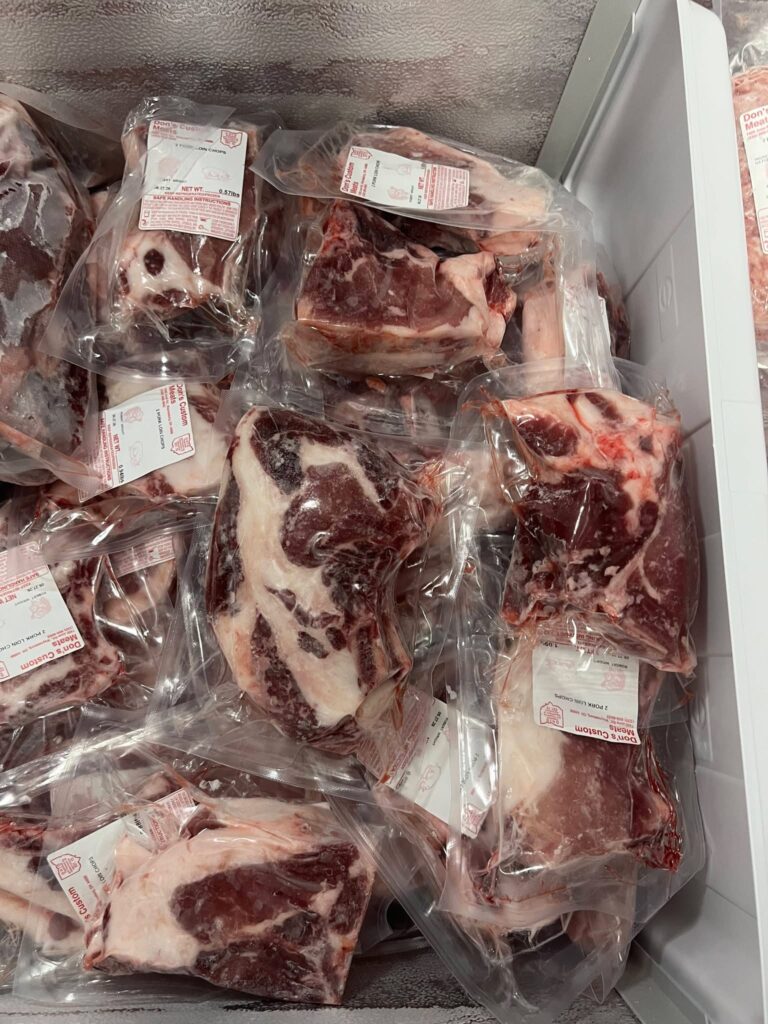
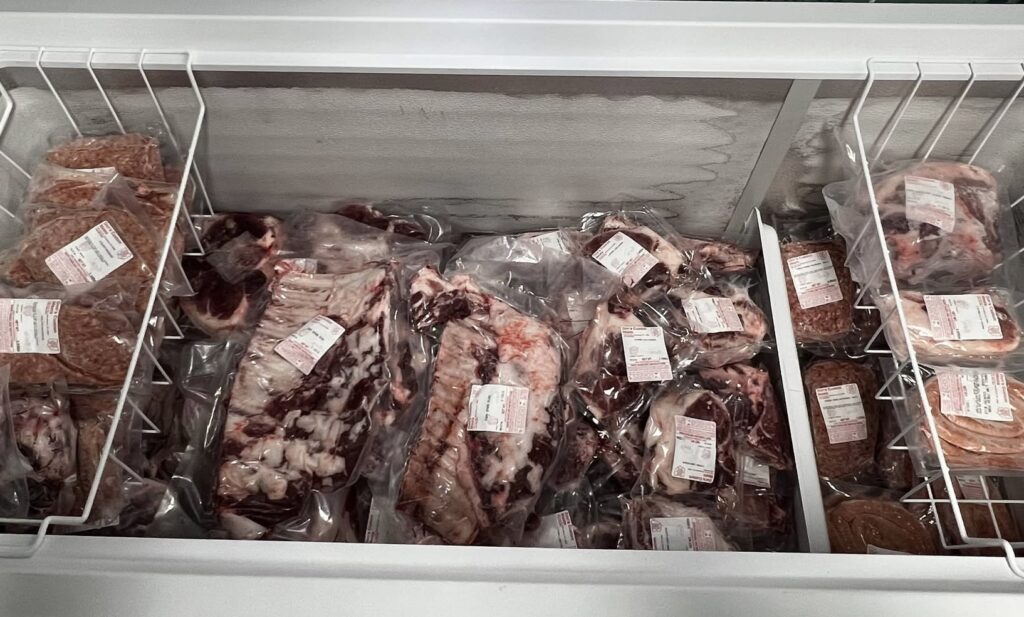
    After 22 months, the freezers are full.

    Looking at those packages stacked inside hits differently than grabbing something from the grocery store. Each one represents morning chores, late evenings, hauling feed, carrying water, fixing fences, herding them back to their paddock and all the little moments that happened along the way.

    There is something deeply satisfying about knowing exactly where your food came from and the care that went into every step.

    Tonight’s supper will taste a little better, not because it came with a special label or fancy packaging, but because we raised it ourselves.

    Thank you Coconut and Reese. ❤️