A reader recently asked how we balance homeschooling with chores around the homestead. It’s a good question, but the more I thought about it, the more I realized we don’t really balance the two. The chores aren’t built around homeschooling, and homeschooling isn’t built around the chores. That’s just how our family lives, and somewhere along the way the two naturally grew together.
The funny thing is, homeschooling didn’t start because of the homestead. It actually came first. Years before we packed a moving truck or started calling this place JW Homestead, our middle daughter, K, came to us and asked if she could be homeschooled. At first, I didn’t think much of it. I figured it was another kid phase. She told us she was bored, but that wasn’t the only reason. She was also frustrated by how kids were treating each other and even their teachers. We listened, but I honestly expected the idea to disappear after a week or two.
It didn’t.
K kept asking, and Nicole started doing what Nicole does best. She researched everything she could get her hands on. She compared curriculum, watched videos, read reviews, and came back with a plan. She wasn’t asking me to blindly trust the process. She had answers to the questions I hadn’t even asked yet, and that gave me enough confidence to say yes.
Well… sort of. I agreed to try it from Christmas break until the end of the school year. That was the deal. We’d give it an honest shot, then sit down and decide if we wanted to continue. I figured that was a fair compromise. If it worked, we’d keep going. If it didn’t, we’d go back to traditional school.
One of the first things that surprised me was how quickly K finished her lessons. I remember wondering what she was going to do with the rest of the day. I expected to hear something like, “Can I go watch TV?” or “Can I go play?” Instead, she asked if there was more she could learn. I wasn’t expecting that answer at all. The following school year, M asked if she could homeschool too, and before long both girls were learning at home.

Nicole is our teacher. I still have a full-time job, so while I’m off solving technology problems, she’s at home teaching math, science, history, English, and everything else that goes along with it. My role is different. By the time I get home, school on paper is usually over, but that’s when I get to hear what they learned, answer questions, ask a few of my own, and somehow those conversations keep going through dinner and into the evening.
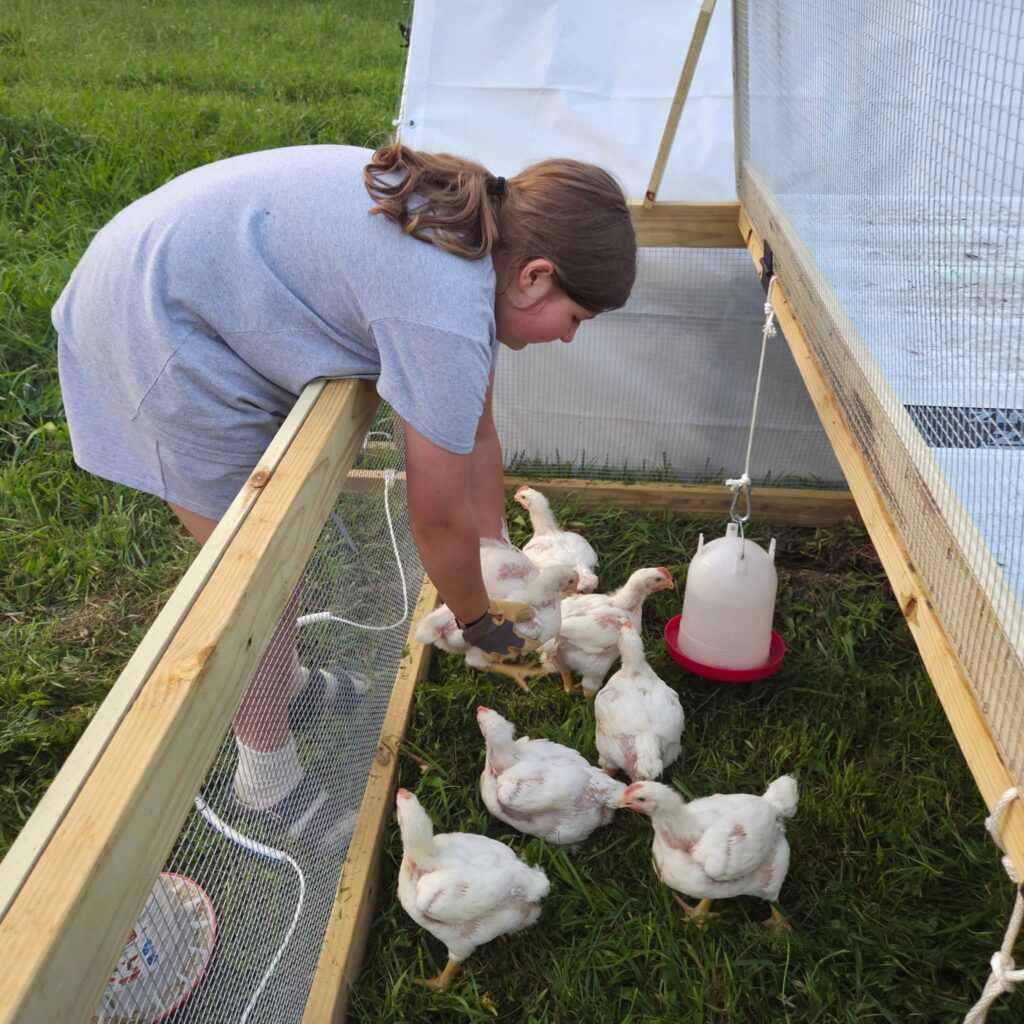
Our mornings are pretty simple. Everybody eats breakfast, everybody helps feed the animals, and then Nicole starts lessons with the girls. They break for lunch, finish another lesson or two, and by early afternoon the books are usually put away. The chores didn’t change because we homeschool. The girls would’ve had chores no matter what. Around here everybody pitches in because that’s what families do.
What changed was everything that happened in between.
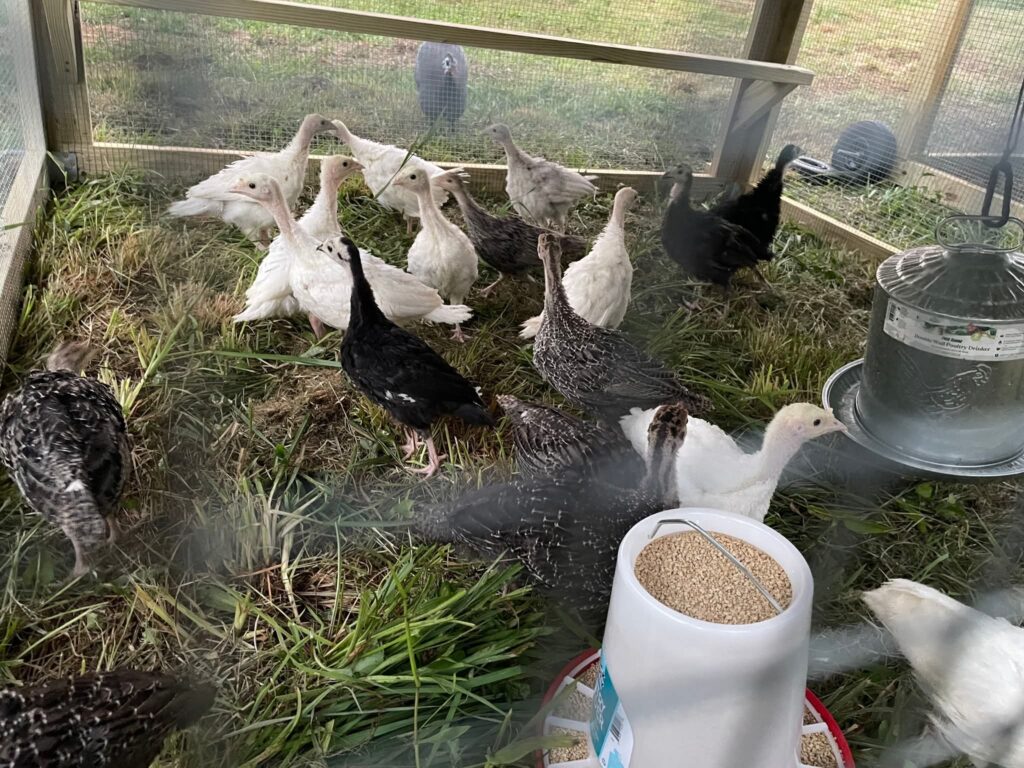
If we’re outside one night and the Milky Way is bright overhead, somebody asks why we couldn’t see it when we lived in the city. If chicks are hatching, we’re talking about biology before breakfast. If one doesn’t make it, that’s a hard conversation, but it’s a real one. If we’re picking peaches or blueberries, we’re talking about why one tree produced more fruit than another. If I’m paying bills and one of the girls wanders over, we’ll end up talking about interest rates, loans, or why borrowing money isn’t free. None of those conversations were scheduled. They happened because somebody was curious enough to ask a question.

The meat chickens probably changed my perspective more than anything else. When you’ve watched a chick hatch, carried feed buckets every day, made sure it had clean water, and then harvested it months later, supper means something different. It isn’t just food anymore. You understand that a life fed your family. You become a lot slower to scrape leftovers into the trash because you know exactly what it took to get that meal onto your plate. Everything has a purpose, and I think that’s a lesson that’s getting harder to find.
People ask about socialization more than anything else. I understand the question because I asked it myself years ago. My answer today is pretty simple. We don’t believe social skills magically appear because kids spend the day in a classroom. They’re learned by doing. When we go to a restaurant, the girls order their own food. If we’re at a gas station or a store, they’re the ones paying for their snack and making small talk with the cashier. They learn to look people in the eye, say please and thank you, and have a conversation with adults as well as kids. Around our dinner table, if somebody is talking, the phones get put away. If we disagree, we work through it without yelling over each other. Those aren’t homeschool lessons. They’re family lessons.
The biggest surprise for me wasn’t that homeschooling worked. It was how much more connected we became as a family. Back when the girls were in traditional school, I’d ask, “How was school?” and I’d usually get the same answer every parent gets: “Good.” That was about the end of the conversation. Now I already know what they’ve been studying because Nicole and I talk. If I see an interesting article, a YouTube video, or something happens around the homestead, I know what they’ve been learning and can tie it into a conversation. Sometimes I’m the one asking questions. Sometimes they are. Either way, the learning didn’t stop because the books were closed.

I still check in with the girls pretty regularly too. Not just about school, but about life. Are they happy? Is something frustrating them? Do they still enjoy homeschooling? We don’t assume that because something worked three years ago automatically works today. Families change. Kids grow up. We keep talking about it because that’s what families do.
If I could go back, I wouldn’t spend my time trying to convince the old version of me that homeschooling works. I’d simply tell him to listen to K a little sooner. We thought we were learning how to homeschool our kids. What we were really learning was how to make learning part of everyday life, and without realizing it, that lesson prepared us just as much for the homestead as building a chicken coop or planting a garden ever did.
Leave a Reply